

Ask anyone in Artesia or Hobbs whether they worry about frozen pipes and most will tell you no. This is the desert. Winters are mild. The grass is still green in November.
Then a cold front drops in overnight, the temperature sits in the teens until mid morning, and by the time the sun comes up a pipe in the garage wall has split open. The water does not stop. A quarter inch crack can push out several hundred gallons a day, and it keeps going until somebody finds the main shutoff.
February 2021 is the one everybody remembers. That storm burst frozen pipes across New Mexico and all of Texas, and plumbers were booked for weeks. But it does not take a historic freeze. A single hard night below 20 degrees will do it, and we get those most winters.
The good news is that frozen pipes are one of the most preventable claims there is. Almost everything that stops them costs nothing and takes ten minutes.
Why frozen pipes burst, and it is not what most people think
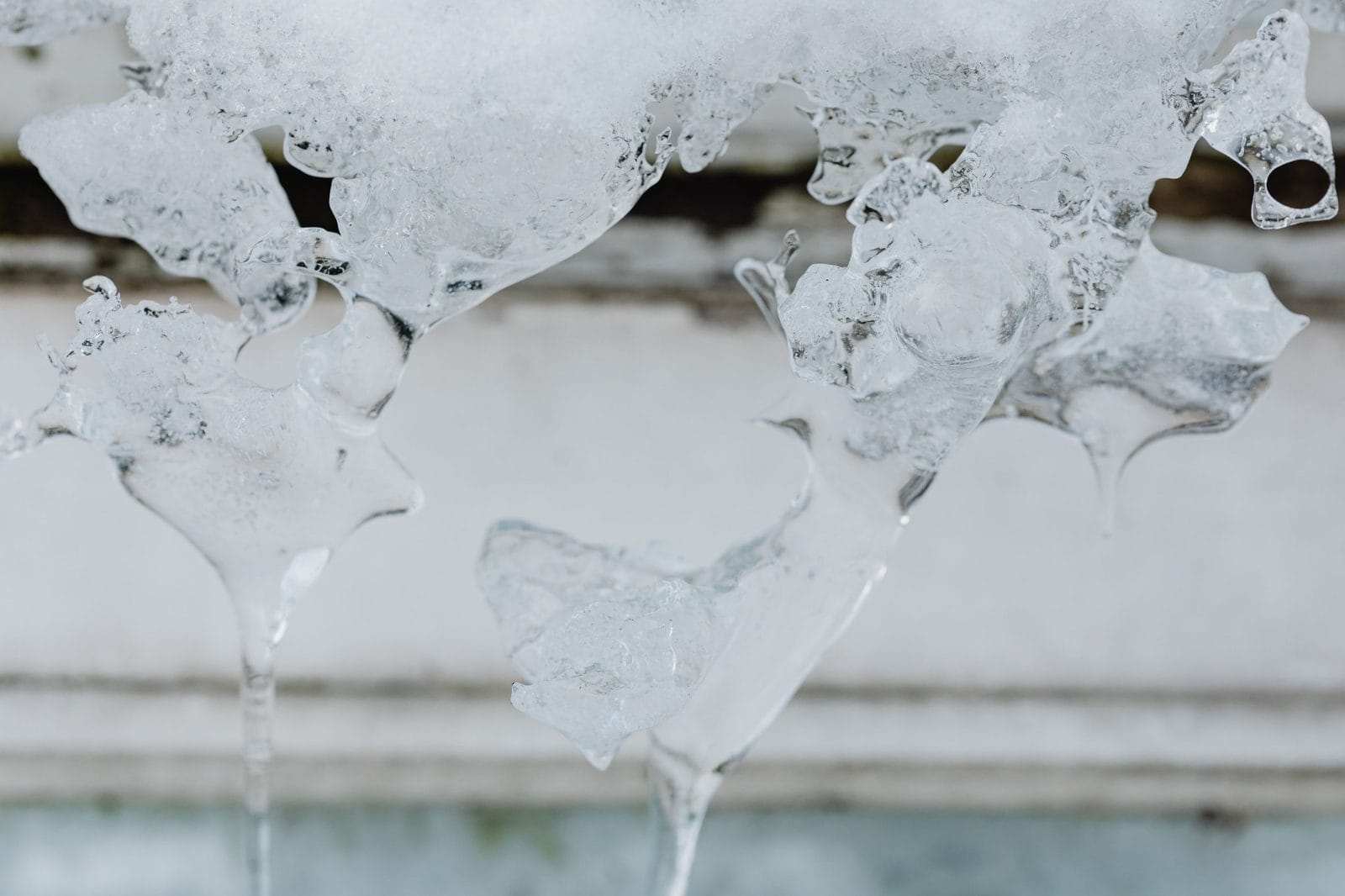
Water expands when it freezes. That part everyone knows. But the ice itself is almost never what splits the pipe.
What happens is this. Ice forms at one spot, usually where the pipe runs through a cold space. That plug of ice blocks the line. Water keeps pushing against it from the supply side, and with nowhere to go, pressure builds between the ice plug and the closed faucet downstream. The pipe fails at its weakest point, which is often several feet from where the ice actually formed.
That detail changes what you do about it. Leaving a faucet dripping does not work because moving water will not freeze, since a slow drip can still freeze in a cold enough pipe. It works because an open faucet gives that pressure somewhere to escape. Relieving the pressure is the whole point.
It also explains the cruelest part of a freeze. The pipe splits while it is frozen, but nothing leaks yet because the ice is plugging the hole. The flood starts hours later when everything thaws and the water finds the crack. Plenty of people go to work thinking they got lucky and come home to a ceiling on the floor.
Where frozen pipes actually happen
It is never the pipe under your kitchen sink in the middle of the house. Frozen pipes happen in the spaces nobody heats.
- Outdoor spigots and hose bibs. The most common failure in this part of the country, and the easiest to prevent.
- Pipes in the garage. Especially where the water heater sits in an attached garage with an uninsulated door.
- Pipes in exterior walls. Often under a kitchen sink on an outside wall, where the cabinet door blocks the room’s heat.
- Crawl spaces and attics. Anywhere a line runs through unconditioned space.
- Sprinkler and irrigation lines that were never drained in the fall.
- Anything in a house sitting empty. Rentals between tenants, a property on the market, a second home. More on this below, because it is also the fastest way to get a claim denied.
How to prevent frozen pipes before the first hard freeze
This weekend, once, and you are done for the season:
- Disconnect every garden hose. A hose left attached traps water in the spigot, and that is where the split starts. This one thing prevents more burst pipes than everything else combined.
- Cover outdoor spigots. Foam covers cost about three dollars at any hardware store in town.
- Drain the sprinkler system and shut off its supply valve.
- Find your main water shutoff and make sure it turns. Most people have never touched theirs. Two in the morning with water pouring through the ceiling is a bad time to learn where it is, or that it is seized shut.
- Insulate pipes in the garage, crawl space and attic. Foam sleeves, a few dollars a length, cut with a knife.
The night a freeze is forecast:
- Open the cabinet doors under sinks on exterior walls so the room’s heat reaches the pipes.
- Let a faucet drip, the one furthest from where the water comes into the house. A slow steady drip, not a trickle.
- Keep the heat on, and do not drop it below 55 degrees, even if nobody is home. This matters for your policy as much as for your pipes.
- Leave the garage door closed if there is plumbing in there.
If you are leaving town for more than a few days in winter, either keep the heat at 55 and have somebody check the house, or shut the water off at the main and drain the lines. Those are the two options. Turning the thermostat off and locking the door is the one that ends in a claim.
If you find frozen pipes, or one bursts
If a faucet gives you nothing but a trickle, you probably have a frozen line that has not split yet. Leave that faucet open and warm the pipe from the faucet end toward the frozen section, with a hair dryer or towels soaked in hot water.
Never use an open flame
Do not thaw frozen pipes with a blowtorch, a propane heater or anything with a flame. House fires start this way every winter, and you trade a plumbing bill for a much worse one.
If a pipe has already burst:
- Shut off the water at the main. Everything else can wait. Every minute is more water in the walls.
- Open the faucets to drain what is left in the lines.
- Cut the power to any area where water is near outlets or the panel.
- Photograph everything before you move or clean anything. Wide shots and close-ups, the broken pipe, the standing water, the damaged belongings. This is what the adjuster works from.
- Call us. We will get the claim started and tell you what your policy actually does here.
- Then start drying. Water damage gets worse by the hour and mold follows fast. Most policies expect you to take reasonable steps to prevent further damage, so pulling up soaked carpet and getting fans running is part of your job as the policyholder, not something that hurts your claim.
Keep the receipts for anything you buy or pay for during the emergency, including the plumber. Those often get reimbursed.
What your policy covers for frozen pipes, and the clause that gets claims denied
A standard homeowners policy generally covers water damage from frozen pipes that burst, because it is sudden and accidental. That usually includes drying out the house, repairing damaged ceilings, walls and floors, and replacing belongings the water ruined.
What it generally does not cover is the pipe itself. The policy pays for the damage the water caused, not for the plumbing repair that stopped it. People are surprised by that one every time.
It also will not cover damage that built up slowly. A joint that has been seeping behind a wall for months is maintenance, not a sudden accident.
The vacancy clause
Most homeowners policies limit or exclude freeze damage if the house was unoccupied and you did not either keep the heat on or shut the water off and drain the system. The wording varies by carrier, but the idea is the same across the industry. If the house was empty and cold and nothing was done, the loss was preventable and the policy is not going to pay for it.
This catches three kinds of people every winter. Snowbirds who close up and leave. Owners of a house sitting on the market. And landlords with a unit between tenants, which is why anyone with rentals should read our page on landlord insurance, where the same vacancy problem shows up in a bigger way.
The fix costs almost nothing. Leave the thermostat at 55 and have somebody look in on the place, or shut the water off at the main and drain the lines. Either one keeps you covered.
If you are not sure what your policy says about freeze damage or vacancy, bring it to us and we will read it with you. That is a ten minute conversation in November and a very expensive one in January. For general questions about insurance regulation in the state, the New Mexico Office of Superintendent of Insurance is the state authority.
Ten minutes now, or a very long January
Frozen pipes are the rare claim you can almost always avoid. Disconnect the hoses this weekend. Find your shutoff valve and make sure it turns. If you are going out of town, leave the heat at 55.
And if you want to know what your policy actually says before you need to find out the hard way, call us.
Artesia: 1901 W. Main St, 575-736-1500
Lovington: 423 Main St, 575-396-3645
Hobbs: 414 N Turner St, 575-396-3645 ext. 206
Lubbock: 6845 82nd St. Suite 101, 806-368-7613
We write homeowners and landlord coverage throughout New Mexico and Texas.
This article is general information, not a statement of coverage. Policy forms, limits and exclusions vary by carrier and by state. See your policy for actual terms, and talk with us about what applies to your home.



A clear and honest guide — the explanation of why frozen pipes burst is the part most people get wrong. It is the pressure building behind the ice, not the ice itself, that splits the pipe, and the damage only shows when the thaw comes. The vacancy clause warning is just as important: keeping the heat at 55 and having someone check the house costs almost nothing compared with a denied claim and a flooded home. Ten minutes of prevention really is the difference.
Excellent explanation of why frozen pipes burst — the pressure building behind the ice blockage is the part most people miss. The prevention checklist is practical, especially finding the main shutoff before a freeze hits. The vacancy clause warning is also important for anyone leaving a home empty in winter.